936-856-7894


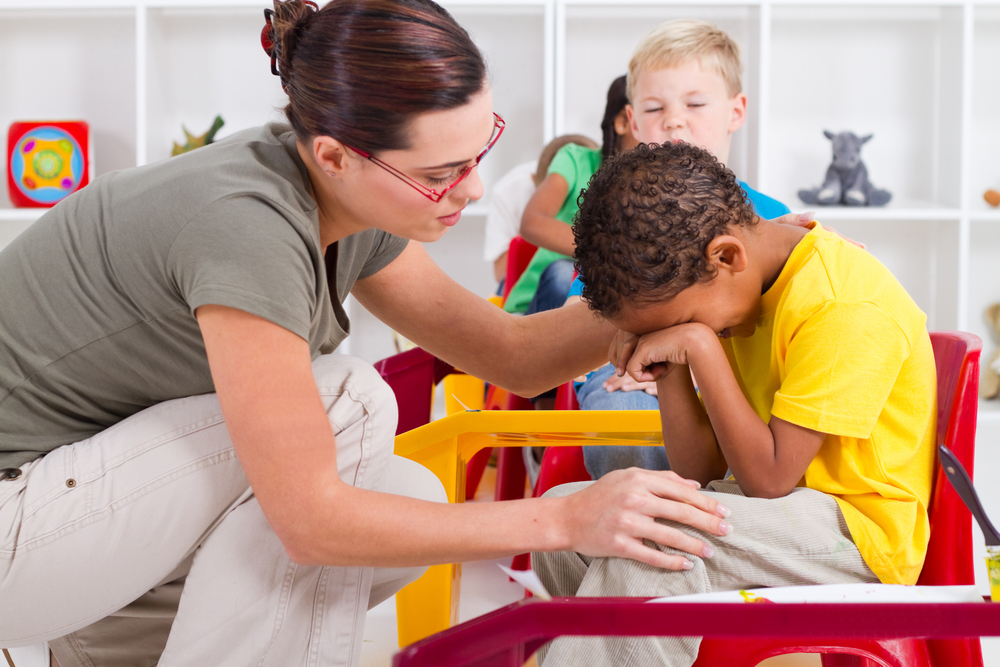
Crying fits in toddlers can feel overwhelming, especially in a new environment like preschool. For young children, emotions often come faster than their ability to express them. What looks like a meltdown is often a child trying to communicate something they do not yet have the words for.
In a well-run preschool, these moments are not treated as disruptions. They are handled with intention. With trained teachers, consistent routines, and clear safety practices, children are guided through emotions in a way that helps them feel secure and understood.
Key Takeaways
- Crying fits are a normal way for toddlers to communicate unmet needs and emotions
- Preschool teachers respond with calm, supportive guidance rather than quick correction
- Consistent routines help reduce anxiety and prevent emotional overwhelm
- Children build emotional skills through everyday interactions and gentle guidance
- With time and consistency, toddlers learn to manage emotions and recover more quickly
Why Crying Fits Happen More Often in Preschool
Starting preschool brings a lot of new experiences for a toddler. New faces, unfamiliar routines, and time away from parents can feel overwhelming at first.
You may notice that crying fits tend to happen at certain times, like:
- During morning drop-off
- When switching between activities
- While sharing or playing with others
- Toward the end of the day, when they are tired
It is usually not just one thing causing the reaction. Most of the time, it is a combination of adjusting to a new environment, feeling overstimulated, and not yet having the words to express what they need. At this age, the part of the brain responsible for emotional control is still developing, which is why strong reactions are so common.
Good preschool teachers understand this. They do not just respond to the crying. They try to understand what is behind it. That thoughtful approach helps children calm down more quickly and feel supported instead of overwhelmed.
What Really Happens When a Child Has a Crying Fit
From the outside, it can look like a quick moment. A child starts crying, and a teacher steps in to comfort them. But inside the classroom, there is a lot more awareness behind that response.
Teachers are constantly reading the situation. Is the child overwhelmed? Tired? Frustrated? The first instinct is not to rush the crying away, but to understand what is going on underneath it.
Instead of reacting quickly, the response usually unfolds in a calm, steady way:
- Taking a brief moment to understand what triggered the reaction
- Getting down to the child’s level and speaking softly
- Letting the child know it is okay to feel upset
- Offering comfort, or sometimes giving a little space to reset
- Gently guiding them back into an activity when they are ready
What makes the biggest difference is how natural this feels to the child. There is no pressure to “stop crying” right away. The focus is on helping them feel safe enough to settle on their own.
Over time, children begin to trust this process. They learn that even when emotions feel big, they are not alone in handling them.
How Daily Structure Reduces Emotional Overload
One of the biggest shifts children experience when they start preschool is the level of consistency in their day. At home, routines can change depending on the day. In a preschool classroom, things tend to follow a steady rhythm, and that predictability makes a real difference.
Over time, children begin to pick up on what comes next without needing to be told every step. They know that after playtime comes snack, after snack comes another activity, and that rest time is part of the day. This sense of knowing what to expect helps them feel more settled and less anxious. Early childhood research shows that predictable routines help children feel secure, build a sense of control, and support emotional regulation, reducing stress and behavioral challenges over time.
A typical preschool day flows through familiar moments like a consistent drop-off routine, planned play and learning time, regular snacks and meals, and a period for rest or quiet time. Transitions between activities are also handled in a structured way, so nothing feels too sudden or confusing.
When this kind of routine is repeated every day, children start to feel more in control of their surroundings. And when they feel that sense of control, those overwhelming moments, like crying fits, tend to happen less often and pass more quickly.
Teaching Emotional Skills in Real Time
Emotional skills are not something children learn overnight. They build slowly, through everyday moments that might seem small but really matter. In a preschool setting, these moments happen all the time.
A teacher might quietly name what a child is feeling or gently encourage them to pause and take a breath. These are not formal lessons, just consistent, thoughtful interactions that help children begin to understand their emotions.
Over time, those small moments start to add up. You may notice your child:
- Recognizing their feelings instead of reacting right away
- Using simple words to express what they need
- Pausing, even briefly, before responding
- Turning to a teacher for comfort or support
You start to see the shift in little ways. Fewer tears, quicker recovery, and more effort to express what they are feeling.
The First Few Weeks: What Parents Should Expect
The first few weeks of preschool can feel like an emotional rollercoaster, especially during drop-off. It is completely normal for children to cry in the beginning. For many parents, that moment when their child holds on tightly or gets upset can be the hardest part of the day.
In most cases, this phase follows a familiar pattern. At first, separation feels uncomfortable, and children may resist it. But once they step into the classroom, something shifts. A familiar toy, a friendly teacher, or a simple activity begins to draw their attention. Little by little, they start engaging, even if the goodbyes are still tough.
What makes a big difference during this time is consistency. A short, calm goodbye helps more than a long, emotional one. When parents trust the teacher’s routine and keep departures simple, children begin to understand that preschool is a safe and predictable place. Teachers are prepared for this stage and know how to gently guide children through those first moments of the day.
Within a few weeks, things usually begin to change. The tears do not disappear overnight, but they become shorter. The hesitation fades. And slowly, you start to see your child walk in with a little more confidence than the day before.
Safety, Supervision, and Why They Matter in These Moments
Even during emotional situations, safety does not take a back seat. Teachers are constantly balancing emotional support with active supervision. At Lighthouse Willis, staff follow clear supervision protocols and maintain close awareness of every child while responding calmly to emotional moments. This ensures children feel supported without compromising their safety or the overall classroom environment.
That means:
- Every child remains within sight
- Staff maintain proper ratios at all times
- Responses follow clear safety procedures
- Any concerns are documented and communicated
This structured approach ensures that children are supported emotionally without compromising their physical safety. It also creates a calm, secure environment where both emotional needs and supervision are consistently maintained.
Why Consistency Between Home and School Helps
Children do best when the adults around them respond in similar ways. When expectations change from one place to another, it can feel confusing, especially when they are still learning how to handle big emotions.
Even a small alignment between home and school can make a noticeable difference. When calming techniques feel familiar, routines follow a similar rhythm, and responses stay steady, children begin to understand what to expect. That sense of familiarity helps them feel more at ease.
Over time, this consistency builds a sense of security. And when children feel secure, they are less likely to become overwhelmed and more able to manage their emotions in a calm and confident way.
When Things Start to Change
Progress does not happen all at once, and in the beginning, it can feel slow. But over time, you start to notice small shifts in how your child responds to situations that once felt overwhelming.
You may begin to see:
- Shorter crying episodes
- Faster recovery after being upset
- More attempts to communicate needs
- Increased comfort in the classroom
These changes might seem subtle at first, but they are meaningful. They show that your child is beginning to understand their emotions and feel more secure in their environment. With the right support and consistency, those small improvements continue to build, helping your child grow more confident and independent each day.
Supporting Your Child’s Learning Journey Through Play
Choosing the right activities and providing intentional play opportunities can make preschool learning both meaningful and enjoyable. With regular routines, guidance, and encouragement, children build confidence, creativity, and problem-solving skills.
As a trusted preschool resource in Willis, Lighthouse Willis offers families structured, hands-on enrichment activities, trained early childhood educators, and a supportive environment that strengthens early learning, social development, and creativity. Their programs are guided by early childhood research and years of experience working with young learners.
Are you ready to support your child’s learning journey in a fun and engaging way? Contact us today to learn more about their preschool programs and enrichment activities that help children learn and grow.