936-856-7894


Starting preschool is a major milestone for children and parents. A new classroom, unfamiliar adults, different routines, and time away from home can bring excitement along with uncertainty. The American Academy of Pediatrics emphasizes that predictable routines and supportive relationships help young children feel secure as they adjust to new experiences.
Preparing your child for preschool is not about eliminating every nervous feeling or expecting complete independence. It is about helping children understand what to expect, practice everyday skills, and build confidence. With encouragement and a supportive preschool environment, starting school can become a positive opportunity to learn, play, connect, and grow.
Key Takeaways
- Practice predictable routines before preschool begins
- Talk positively and realistically about the classroom
- Build independence through everyday age-appropriate tasks
- Prepare for separation with calm and consistent goodbyes
- Partner with teachers to support your child’s individual needs
Why Preschool Preparation Matters
Children often feel more comfortable with new experiences when they know what to expect. Preschool introduces a collection of changes at once, from following a classroom schedule and listening to teachers to sharing materials, interacting with classmates, managing personal belongings, and transitioning between activities. Preparing children for preschool gives them opportunities to become familiar with these expectations gradually rather than encountering every new demand for the first time on the first day.
Preparation also gives parents an opportunity to focus on skills rather than perfection. A child does not need to know every classroom rule, complete every self-care task independently, or walk through the door without feeling nervous. Preschool is itself a place where children develop these abilities. The more helpful goal is to give your child simple tools and experiences that make the transition feel manageable.
Start With the Routines Your Child Will Experience
One of the most practical preschool transition tips is to introduce parts of the school-day routine at home before the first day. If your child will need to wake up, get dressed, eat breakfast, brush their teeth, gather belongings, and leave home at a particular time, practicing a similar sequence can make mornings feel more predictable.
Rather than trying to recreate an entire preschool schedule, choose a few routines that will matter most. Encourage your child to put shoes in the same place, carry a small backpack, clean up after activities, wash their hands before meals, and move from one activity to another when asked. These small habits can strengthen independence while helping your child understand that routines are a normal part of the day.
Focus on These Everyday Skills
| Skill | How to Practice at Home |
| Getting dressed | Let your child try simple clothing and shoes with appropriate help |
| Handwashing | Practice washing hands at familiar points throughout the day |
| Cleaning up | Ask your child to return toys and materials after play |
| Following directions | Give one- or two-step directions during everyday activities |
| Managing belongings | Practice placing a backpack, jacket, or lunch items in a designated spot |
| Using the bathroom | Encourage age-appropriate independence while remaining available for help |
| Eating independently | Let your child practice opening familiar containers and using utensils |
The purpose of these activities is not to test your child. Preschool preparation should feel like everyday learning, with parents offering guidance when a task is difficult and celebrating progress as skills develop.
Talk About Preschool Before the First Day
Children often take emotional cues from the adults around them, so the way parents describe preschool can influence how the experience feels. Talk about school with genuine enthusiasm while leaving room for your child to have questions or mixed emotions. Statements such as, “You will get to meet your teachers and play with other children,” give your child something concrete to imagine without promising that every moment will be easy.
Books, pretend play, and casual conversations can make the classroom feel more familiar. You might set up a pretend classroom with stuffed animals, practice putting toys away when it is time to move to another activity, or take turns being the teacher and student. These playful experiences allow children to explore unfamiliar situations without the pressure of actually being at school.
It is also helpful to avoid making unrealistic promises. Saying that your child will “have the best day ever” may unintentionally make ordinary moments of frustration feel like something has gone wrong. A more reassuring approach is to explain that school can include many different feelings and that teachers are there to help.
Make the First Day Feel Familiar
If the preschool offers an orientation, classroom visit, open house, or teacher introduction, take advantage of it when possible. Seeing the classroom, meeting the teacher, and exploring the space can make an unfamiliar environment feel more comfortable. Learning about what makes a great preschool classroom can also help parents understand what their child may experience.
Before starting preschool, learn the basics of your child’s day, including what to bring, how arrival and pickup work, and any clothing or food requirements. Talk your child through what will happen when they arrive, emphasizing that they will have opportunities to play and learn before you return. Knowing what to expect can make separation feel less uncertain.
Practice Saying Goodbye Without Making It a Big Event
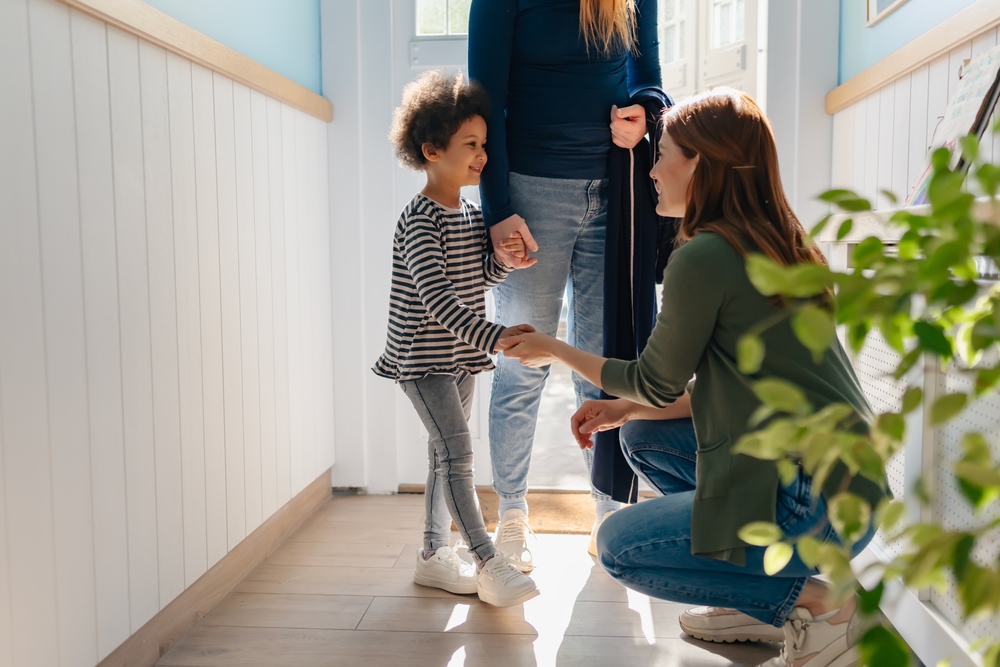
For many families, separation is one of the most emotional parts of starting preschool. A child may cry, cling, hesitate, or repeatedly ask when a parent will return. These reactions do not necessarily mean that a child is not ready for preschool; they can simply reflect the difficulty of adjusting to a new separation and routine.
Practice short separations before the first day when appropriate. A trusted family member can spend time with your child while you step away briefly, allowing your child to experience the important pattern that you leave and return. Keep the practice age-appropriate and reassuring rather than presenting it as a test.
On the first day, create a goodbye routine that is warm, confident, and consistent. A hug, a simple phrase, and a clear statement about when you will return can be more reassuring than repeatedly extending the goodbye. Parents should also follow the preschool’s guidance because teachers may have an established arrival process designed to help children settle into the classroom.
Give Your Child Words for Big Feelings
Preschool preparation is not only about practical skills. Children also benefit from having simple language they can use when they are nervous, frustrated, excited, or unsure what to do.
Before school begins, practice phrases such as:
- “Can you help me?”
- “Can I have a turn?”
- “I need a break.”
- “Where is my teacher?”
- “I miss my mom or dad.”
- “Can I play with you?”
Role-playing these situations can make the words easier to access when your child needs them. Parents can also model emotional language at home by naming feelings without judging them, such as explaining that it is normal to feel excited and nervous about something new. The objective is not to teach children to suppress difficult feelings. Instead, it is to help them recognize emotions, communicate their needs, and learn that adults can help them work through challenging moments.
Encourage Social Skills Through Everyday Play
Children do not need to arrive at preschool already knowing how to make friends, resolve every disagreement, or share perfectly. Those skills develop over time through relationships and guided experiences. Still, everyday opportunities to practice cooperation can make the transition easier.
Invite your child to participate in activities that involve taking turns, following simple rules, listening to another person, and working toward a shared goal. Board games, building activities, pretend play, art projects, and playdates can all provide natural opportunities to practice these behaviors.
When conflicts happen, resist the urge to solve every problem immediately. Instead, ask questions that help your child think through possible solutions. For example, you might ask what each child wants, what could be done next, or how they could take turns. These conversations build problem-solving skills that children can gradually apply in group settings.
Let Your Child Participate in Preschool Preparation
Children often feel more capable when they have a role in preparing for a major transition. Give your child small choices that do not change the important boundaries of the school routine. Let them help choose a backpack, select a comfortingly familiar item when permitted by the school, organize their clothes, or decide which book to read before bedtime.
You can turn preparation into a shared activity rather than a long list of instructions. For example, the night before preschool, your child might help place their belongings by the door while you review what will happen in the morning. This creates a sense of involvement and gives children an opportunity to practice responsibility without making them responsible for managing everything themselves.
When Your Child Is Having a Difficult Time Adjusting
A challenging first day does not automatically indicate a poor preschool fit. Children may experience temporary changes in mood, clinginess, sleep patterns, appetite, or willingness to talk about school while they adjust. If your child is having frequent emotional outbursts, understanding why preschoolers may have crying fits and how to respond can help you approach the transition with patience and consistency.
If concerns persist, communicate with the teacher and ask specific questions about your child’s classroom experience. Understanding when difficulties occur, what happens beforehand, and what helps your child recover can help you create a consistent support strategy at home and school. Parents should also share relevant information about their child’s routines, preferences, communication style, and comfort needs so teachers can better support the child in the classroom.
Building a Strong Partnership With Your Child’s Preschool
A positive preschool experience is most effective when families and teachers work together. Parents know their child best, while teachers bring professional experience observing children in group learning environments. Sharing information respectfully can help both sides understand what a child needs during the transition.
Ask teachers how your child is participating, which activities they enjoy, and whether there are particular routines that seem challenging. At home, reinforce the same broad skills the classroom is developing, such as listening, taking turns, cleaning up, communicating needs, and managing simple responsibilities.
This partnership also helps parents recognize that preschool preparation does not end on the first day. Confidence develops through repeated experiences in which children discover that they can enter a new environment, ask for help, solve small problems, connect with others, and return home knowing they accomplished something new.
Helping Children Build Confidence Through Early Learning
A supportive preschool environment plays an important role in helping children develop social skills, confidence, independence, and positive relationships. Through classroom routines, guided play, and daily interactions with teachers and classmates, children learn how to communicate, cooperate, solve problems, and build meaningful friendships.
As a faith-based early learning school, The Lighthouse School in Willis provides a nurturing environment where children are encouraged to grow socially, emotionally, and academically. Our preschool programs include structured activities, caring teacher guidance, and opportunities for children to practice important learning skills while building confidence and a love for learning.
Want to learn more about our preschool programs? Contact us today to discover how The Lighthouse School helps children develop the skills and confidence they need to learn, grow, and thrive.